
Across the country, communities are grappling with a shared challenge: technology is evolving faster than traditional education and training systems can keep up with. New mobility solutions, electrification, autonomy, and data-driven services are transforming how work gets done, yet many workforce pipelines still rely on outdated models that separate learning from real-world applications.
What sets the Detroit Region apart is the coordination across education providers, industry partners, and community organizations. Educational institutions collaborate with employers to align curricula with real demand. Industry partners provide insight, equipment, and mentorship. Community organizations ensure access and support for learners who may not have followed traditional pathways.
Rather than reacting to disruption after it happens, the region is aligning workforce training with industry demand, community access, and hands-on learning. This alignment allows programs to evolve as technology changes, creating a workforce ecosystem that moves at the pace of innovation rather than lagging it.
From Credentials to Capabilities
From colleges and universities to vocational and continuing education programs, including bootcamp-style initiatives, educational institutions remain central to workforce development. While the focus has traditionally been on earning credentials such as degrees and certificates, the value of these offerings is shifting. Employers now prioritize specific skills, adaptability, and practical experience. Reflecting this change, Detroit’s mobility ecosystem is moving away from abstract credentials and toward concrete capabilities.
But the shift goes beyond skills-building. Educational institutions do more than teach tools; they teach people how to learn. It’s a subtle distinction that pays incredible dividends in industries like mobility that are constantly changing as technology continues to advance. It is nearly impossible for education to keep pace with the speed of technology and business, but institutions can help build a culture of learners who can adapt and grow with these advancements throughout their careers.
“Skills and credentials are still important in today’s business world but helping students understand that learning doesn’t stop is just as critical. Adaptability is now part of every career,” says Sarah Gregory, VP, Strategic Partnerships & Talent for the Detroit Regional Partnership.
This emphasis on agility and continuous learning underscores the need for educational approaches that extend beyond the classroom and into real-world environments.
Hands-On Learning
Mobility systems are complex and interconnected, involving infrastructure, digital platforms, safety protocols, and constant adaptation. Classroom learning alone cannot fully prepare workers for these environments.
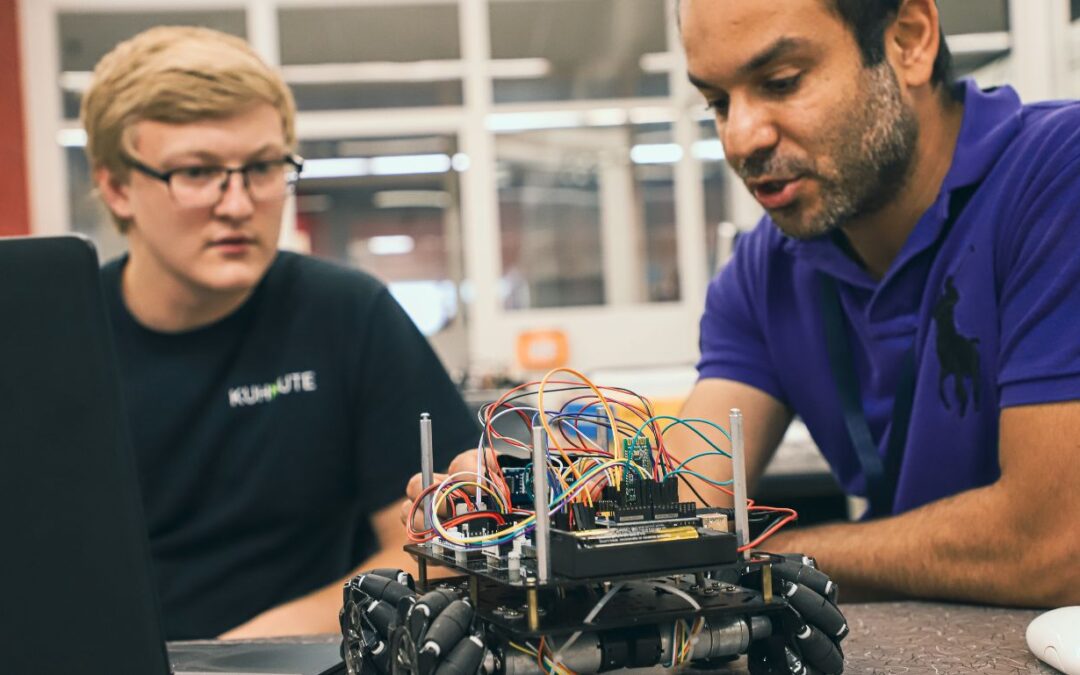
Through hands-on work in real operational environments, learners build technical competence, strengthen problem-solving skills, and gain confidence. This experiential training builds job readiness while fostering the adaptability needed in a fast-evolving field.
As Bernard Swiecki, vice president of mobility and research at the Global Epicenter of Mobility, notes, “The future mobility workforce won’t be defined by where someone went to school or how long they sat in a classroom, but by what they can actually do on day one. Capabilities, not credentials alone, are what move innovation forward.”
Initiatives like Code 313 the Drone Pilot Academy serve as powerful examples of learning programs preparing individuals for a rapidly expanding field that intersects mobility, infrastructure, logistics and data collection.
The bootcamp-style Drone Pilot Academy, funded by the Global Epicenter of Mobility, teaches students everything they need to know to become FAA-certified commercial drone pilots – a field rapidly growing but lacking the talent to fill job openings.
More than 100 students completed the program in 2025 – free of charge thanks to the Global Epicenter of Mobility’s investments. Student Eric Hernandez described the experience as more than training, calling it “the value of my future.”
While hands-on programs build the capabilities employers need, their long-term impact depends on who can access these opportunities and how broadly they are made available.
Access and Inclusion as Strategic Priorities
Building the workforce of the future also requires expanding who gets to participate. Detroit’s approach recognizes that untapped talent exists across communities, often excluded due to barriers like cost, time, or access to information.
Jeannine Gant, Mobility Engagement Officer, explains, “When we reduce barriers and make pathways into mobility careers clearer, we don’t just bring more people into the system, we strengthen it.”
The Detroit Region, through initiatives like GEM, is actively shaping its mobility talent pipeline, creating opportunity for residents while positioning the region to lead in a rapidly transforming industry.